
Student protests are erupting globally. In India, the Election Commission’s Special Intensive Revision (SIR), normally a routine process, has struck off 130 million names from the draft voter list. Students are demanding better educational facilities, timely and fair examinations, and the right to vote, which the SIR process has systematically taken away from them.
On the other side of the globe, the European students have similar demands. French students demand better school conditions, better pay for teachers, and more investment in public education. Spain burst out in protest when an 87-year-old woman was evicted after a rent increase in an already bad housing crisis. Brazil opposed and won against big tech like Meta and the far-right presidential candidate, while Albania demands an end to ongoing corruption, better education, and more jobs.
Needless to say, the world is in crisis, and people are demanding the most basic means of survival from their incompetent governments.
While Gen Z has stormed out into the streets, a protest toolkit was innocently offered to the Disney viewers of the late 90s and early 2000s.
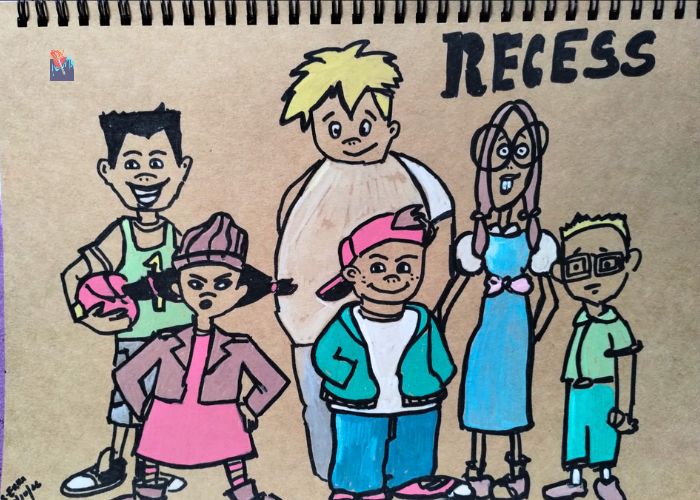
Disney Recess centres on a bunch of misfits: a nerd girl, a strong girl, a poet, an athlete, a kid with a military background, and a mischievous, average kid with the spunk to challenge authority. Created by Paul Germain and Joe Ansolabehere, Recess was produced by Walt Disney Television Animation and told stories beyond what kids could probably do at lunchtime.
When the playground is the country
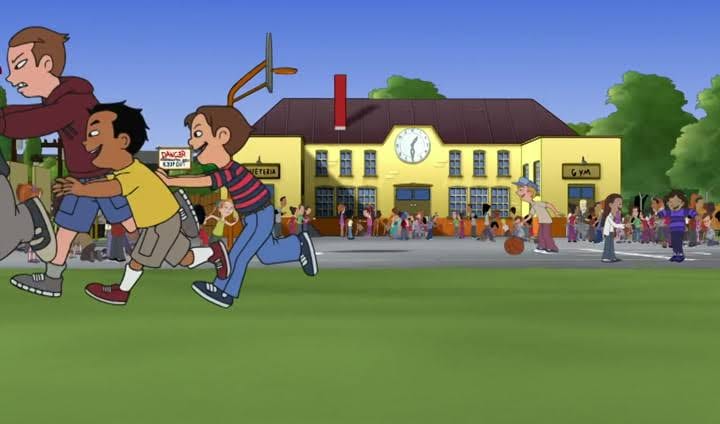
The school playground had all kinds of kids, each hinting at a future path. We had diggers, a swing girl dressed like a pilot, a guru kid, rich girls all named Ashley, a corn-chip girl, and even a spy named Randall. The playground operated like a society and almost a country. When Gus joined the school, they deemed him the “new kid”, and under the Constitution of the Playground, kids weren’t to fraternise with new kids for 48 hours. Gus challenged it.
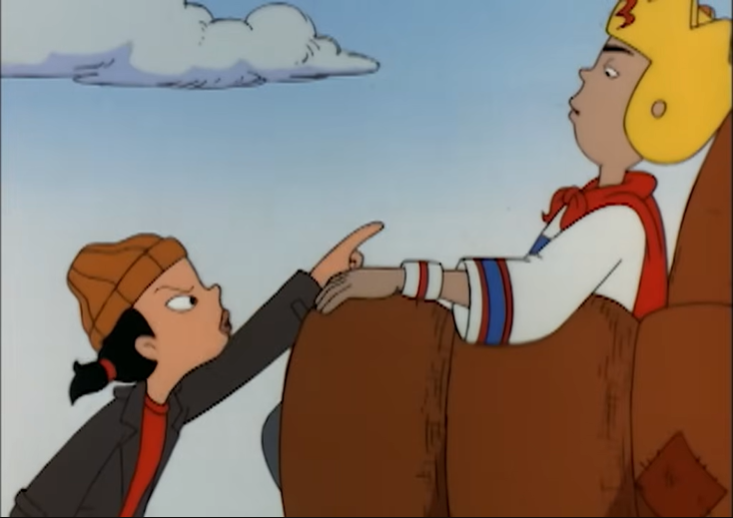
The playground had hierarchies between grades. T.J. Detwiler and his friends were all fourth graders, while King Bob was a sixth grader. So, while the teachers saw all kids as equal, the kids had their own hierarchies on the playground, wielding different power and exercising authority. At the bottom of this ladder are the kindergartners, depicted as primitive tribes, who prefer their own company and drive off external parties.
Playground economics and eating the rich!
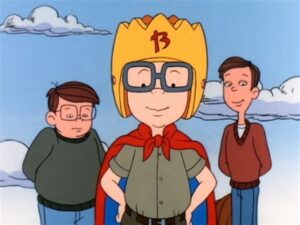
Kids also learned about economics, capitalism, and dictatorship, and experienced them firsthand. King Bob wanted a pyramid in his name and forced kids to slave under the sun. Gus became king for two days, built a bureaucracy, imposed a cookie tax, sent everyone to prison, and unleashed dodgeballs when they protested. At one point, T.J. controlled 80% of the playground stickers, which were used as currency to access water, grass and more. Gretchen and the rest then made him sign a contract stating that he would never control more than 10% of the total stickers on the ground.
When the Ashley(s) started gatekeeping access to better resources and private clubs, all the kids adopted the name Ashley, regardless of gender. They used the rich’s rules against them. Eating the rich! The kids learned about life and society on a playground, not in classrooms.
Unity in diversity of smarts
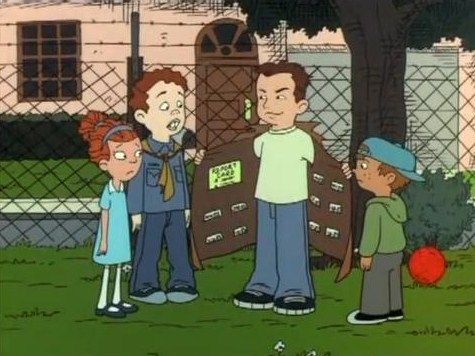
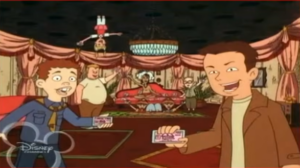
T.J., Spinelli, Gus, Mickey, Gretchen, and Vince had their own strengths and no traits in common, except a shared enthusiasm for breaking the rules and challenging authority. This group contrasts with The Ashleys, The Diggers, or the kindergartners, who bond over similarity.
The group of six knows their way around the school: the ventilation and shortcuts that lead directly to the classroom, the good food in the cafeteria fridge that was deliberately kept away from them, the good flowers in Principal Prickly’s garden, using the crier kid’s skill as a decoy, and they have even looked into the teacher’s lounge. In other words, these kids also possess street smarts.
They know the playground, who does what, the relationship between different entities and can use these skills to organise.
The community extends beyond the playground
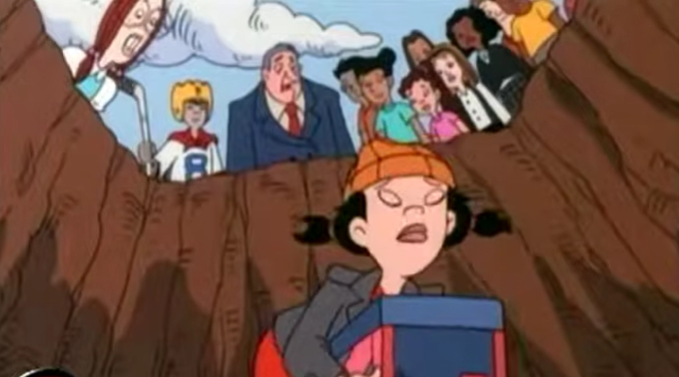
Disney Recess would be incomplete without the heartwarming episode Speedy, We Hardly Knew Ye.
When the class’s pet hamster died, the fourth graders were heartbroken. They worked with everyone on the playground to give it a final farewell, only to discover their hamster had many friends: high school jocks, bus drivers, and even the superintendent. The truth comes out: the teachers replaced the hamster each time it died without telling the students. The group that came from outside the school decided to walk out.
T.J. united them, reminding them that their version of Speedy was a great friend to everyone and that the final send-off was not just for one Speedy, but for all of them. The episode reminds us that our shared love for animals and common human values unite us.
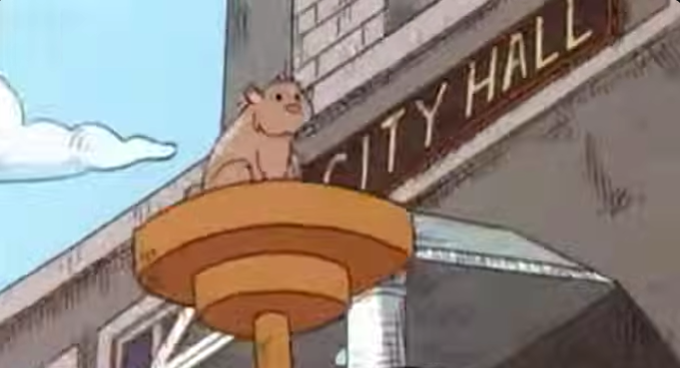
The episode ends on a nostalgic note, showing kids hiding with a Speedy during a war siren, a Speedy in protests, and a Speedy held by kids across generations at the 3rd Street School.
We are all some dumb kid
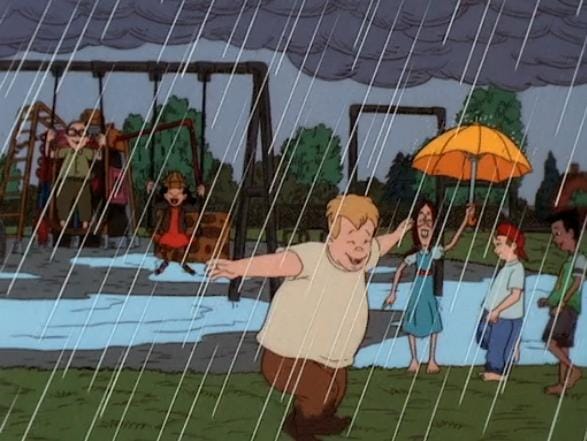
Disney Recess episodes gave us some of our fondest memories because they felt relatable as young school-goers. A script-first approach made Recess the brilliant show it is, wrapping complex adult realities in playground banter without stealing the joy, creativity, and camaraderie of 9-year-olds. As adults, it is impossible to ignore the political themes while also realising there’s still room to grow for one another.
Spinelli sums it up pretty well:
“You sit there on your sixth-grade butt ruling over the playground like some sort of big shot. Well, let me tell you something, Mr Playground King: you are nothing but some dumb kid! So next time you go around calling a guy some dumb kid, just remember this: you’re one too, and let’s face it, Bob, if us dumb kids don’t stand up for each other, who will?”
AD
