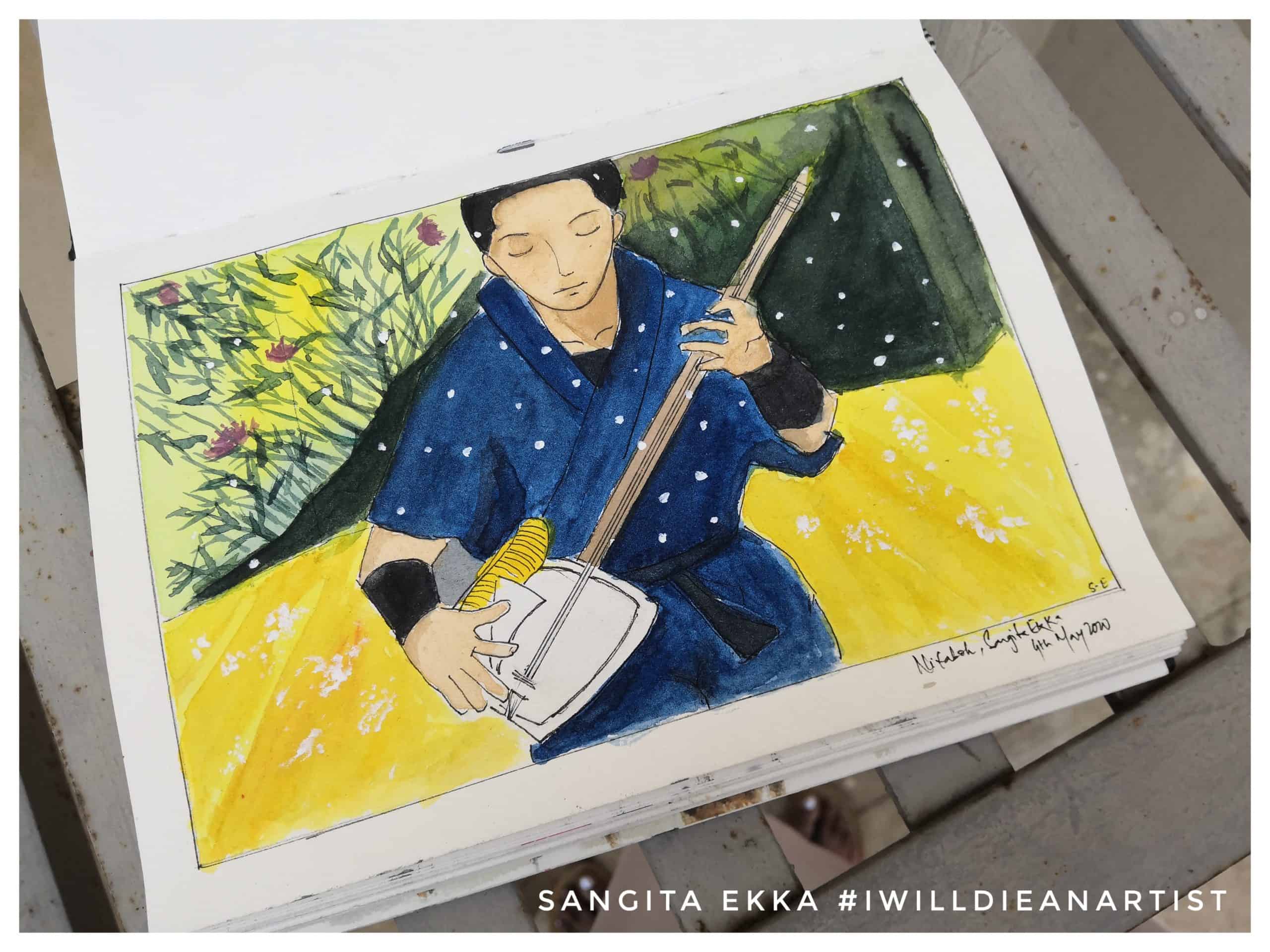
Based on the historical novel by Daiyo Kazuo, the story of master shamisen player – Nitabō is an inspiring unfolding of what one can achieve by finding a sense of purpose and the one to undergo Shu Ha Ri.
Set at an era when Japan’s Edo government (which began in 1603) was battling its sunset days in the 19th century, Nitaboh reflects this chaotic time when Tokyo was witnessing an increase in Western influences.
This anime is a glance into the cultural setting of Japan, where social ranks played a significant role. For any non-Japanese viewer, introducing unfamiliar concepts and terms may be a little tricky to remember as one progresses in watching this anime.
For example, it talks about Komusoh – samurais who played shakuhachi, a bamboo flute. It also introduces the culture of Goze, who were blind female poets and musicians wandering from village to village. Nitaboh also introduced the culture of Todoza, a religious guild of blind musicians.
AD
The social norms of Japan dictated what path one took for life, including the performing arts. This meant that as a waterman’s son, Nitabō could neither become a Komusoh, Goze nor join Todoza. However, this is precisely what makes the journey of Nitabō exciting and inspiring.
Poverty and early age blindness had made his life difficult, but it never reflected in his love for sounds and music. His story is a piece of strong evidence that destiny favors the one willing to go the distance, and when one relentlessly pursues one’s purpose, support from the unlikeliest places follows.
“I will play Shamizan on my own even if I can’t join Todoza.”
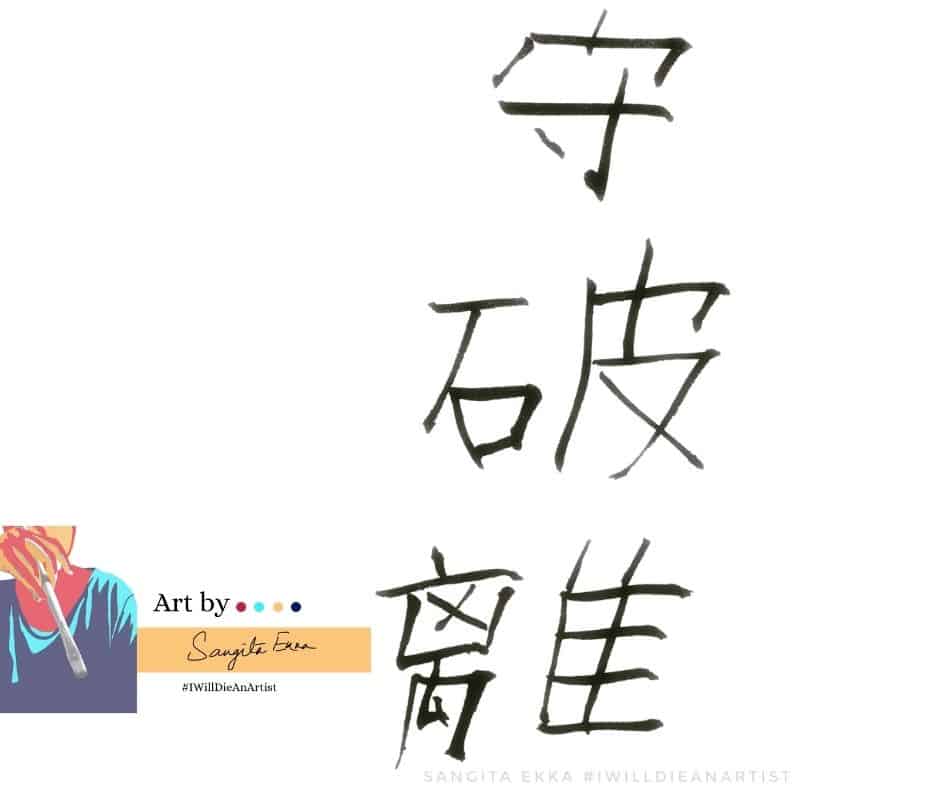
One of the crucial messages I took away from the anime is the concept of Shu Ha Ri, and it’s something every pursuer of mastery must learn. Originally a Japanese martial art concept, it also applies to other paths.
Each syllable in Shu Ha Ri represents a stage as one’s pursuit evolves.
Shu – The stage when you practice exactly the way you are taught. You protect and obey the traditional wisdom.
Ha – The stage when you make modifications to suit yourself, where you break free from traditions and shells. I believe this marks the dawn of individuality.
Ri – The stage when you create something new, where you transcend but without forgetting what rooted you, the scene of originality.
Directed by Nishizawa Akio and released in 2004, Nitaboh reverbs like a time machine. The anime’s attention to detail in reflecting the era in its landscape, attire, and culture before the newspapers could find their way home is humbling and inspiring.
Amidst the music of Tsugaru-shamisen, I found myself repeating mentally – “Not everyone can be a great artist. But a great artist can come from anywhere. These are words that escaped Anton Ego’s mouth on tasting the Ratatouille.
I also realized there’s still a lot to Kubo and the Two Strings that I need to understand.
For me, the core of Nitaboh’s beauty is in the communication that art never dies in the transience of human life. It sleeps peacefully in the teachings, tools, and mediums of artists gone, waiting to be revived and transformed by those who dare to march to the beat of their own drums to strike their own right note.
And maybe we will witness artists’ guilds in future similar to what’s blossoming in Nepal.
“Even monkeys can copy. Play your own style”.
AD

Super easy to get into my account. The page loads fast even on my mobile data which is a huge plus for me. jilioklogin