
Periods are a biological function necessary to carry life forward, yet they remain taboo.
In many Indian cultures, a woman is “untouchable” if she’s on her period. She’s deemed dirty and banned from the kitchen as long as she bleeds. Male members, who are often clueless about periods till they get married, can’t stand the sight of a period cover, a period stain, or a woman buying sanitary products without an opaque plastic bag.
In the same country, some cultures celebrate these periods publicly, announcing that their daughters have matured, a tradition previously used to signal that a woman (a girl who has just begun menstruating) is now of marriageable age.
Getting her first period is something that stays in a woman’s memory. She learns that she has outgrown herself in some ways. She is taught new things, womanly things, because somehow she is a “woman now” at 13 or less.
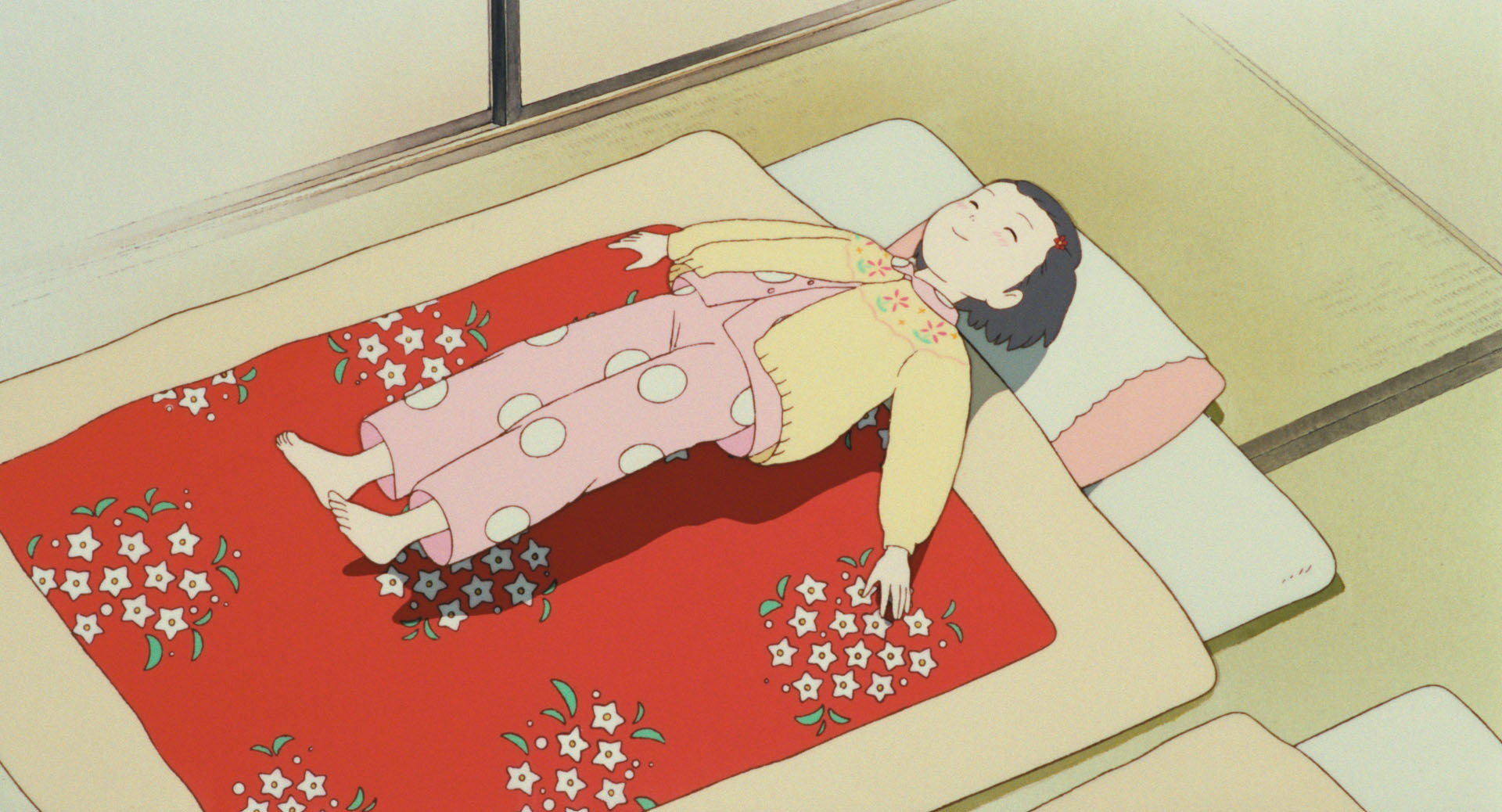
Only Yesterday centers on a 27-year-old working woman named Taeko who visits the countryside for her holidays. As she plans for her trip, she is also nostalgic about her school life and her ten-year-old self.
The film alternates between current and past scenes as it tells her story, and Isao Takahata achieves this with two distinct techniques. The current timeline is detailed and vibrant, like you would expect from a Ghibli movie.
When Taeko is immersed in her memories, the scenes come alive with her girlhood, family, friends, and mundane joys portrayed through watercolour-like painted scenes. The details are scant and blurred, much like a fuzzy dream, allowing the audience to transition smoothly between the past and the present.
During one of her school episodes, Taeko and her female friends are called to the gym while the boys are allowed to go to the playground. In the gym, a nurse is shown teaching them about the female reproductive system and how a woman’s body prepares for a potential baby and periods.
Only girls learn about the information, while boys in her class, who are also prepubertal, are kept out.
Periods become a popular topic among girls as they discuss who got them and who didn’t. Every woman has been through this, asking fellow female classmates about periods, how long they bleed, and when their next period is.
At this point, Only Yesterday subtly communicates that every girl and woman bleeds differently. Some avoid playing during their periods, while others are fine.
Later, boys learn that girls are buying underpants from the school’s infirmary. They become curious and openly ask if they are special, such as for gym requirements. One of the girls tells a boy about periods, and the situation gets worse.
Keep in mind that the boys were excluded from all the information about periods during the gym session that day. The empathy exercise, where they had the first chance to learn about the opposite sex and classmates, was missed.
Boys turned perverts. They looked up skirts, made period jokes, and often got into fights with girls. With no male teacher present during recess or classroom cleaning, there was no one to tell them to behave themselves.
The boys harassed the girls without punishment or accountability.
Only Yesterday is probably the only anime in history that invests a considerable amount of time animating scenes about menstruation and normalizing it. I learned that the school infirmary can be a place to buy sanitary products, unheard of anywhere in the world.
I conclude that sex education in schools should include period topics, and they must be taught to young boys. Information is not enough; they must also learn to respect menstruation and menstruating girls and women, and it’s solely the responsibility of male elders.
AD
This platform has a really great community vibe and the odds are quite competitive. It feels safe and professional. I’m sticking with br114bet5 for my daily plays.