When 15-year-old Princess Ellian says her parents are monsters, a child might imagine fantastical ones, while an adult might think differently.
A feature-length musical fantasy by Skydance Animation, Spellbound tells a princess story with a twist. It’s been a while since animation studios abandoned the search for an appropriate prince and focused on self-growth instead. It’s a story about a teenager desperate to change her parents from being monsters and about self-discovery while she’s at it.
Ellian belongs to the Kingdom of Lumbria, surrounded by magical beauty, unearthly creatures, oracles, and the hierarchy and powers of a human kingdom. Animators have mostly kept the human features intact, with small twists such as elf-like pointy ears and pink and blue hair. And, like any good piece of animation, the story speaks to both adults and kids.
AD
Domestic violence is kept a secret, often from friends
“I am 15. I am a real teenager now. So I wanna spend more time with my parents.”
No teenager has ever said those words.
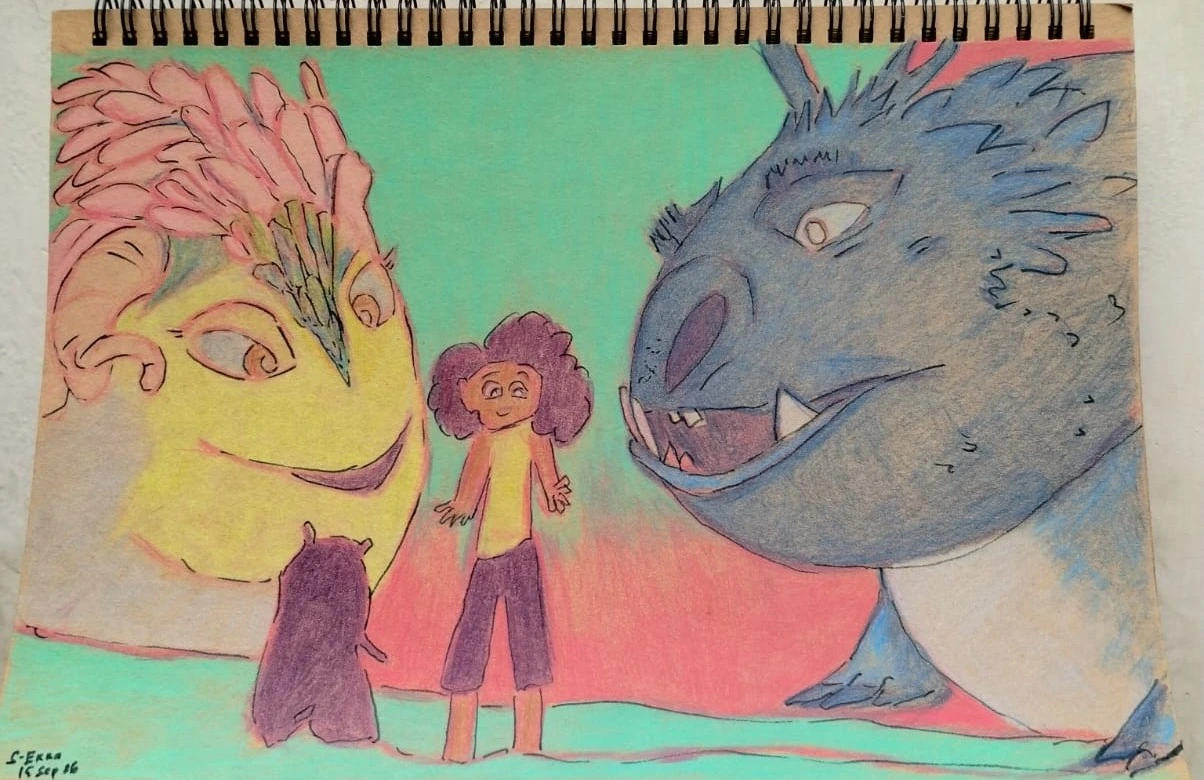
Ellian’s parents are introduced after she lies to her friends. Her embarrassment about her current situation is visible, but it leaves her friends more confused. Later in the palace, we learn that her parents are actually monsters- cute ones who behave like pets, live inside giant cages, and break walls and things.

In the real world, stuff doesn’t break without violence. Ellian doesn’t tell her friends they’re uninvited to her 15th birthday, but she masks the damage by trying to act like an adult and insisting that princess duties far outweigh age-appropriate activities, like hanging out with her friends.
Her family affair is so private that only a few people know about the spell that transformed her parents into monsters. 15-year-old Ellian secretly took on the responsibilities of herself, her kingdom, and her parents, like a 51-year-old would.
Therapists do not have a magic wand
“Everyone has dark feelings. It’s how you deal with them that counts.”
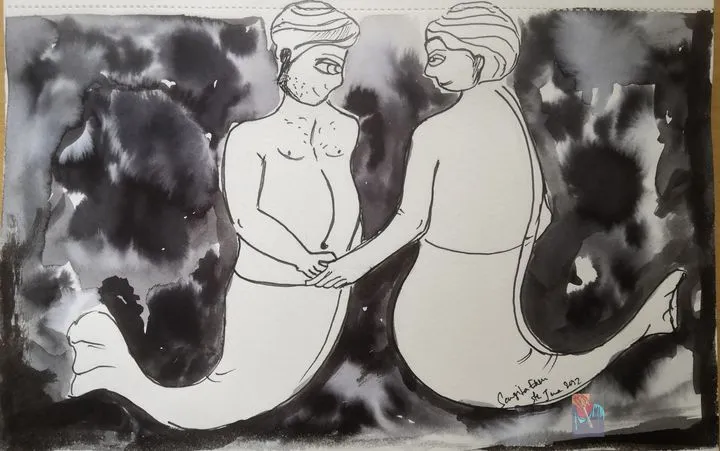
Oracles Lumo and Sunny look like an experienced therapist couple. Talk about a healthy gay representation in animation, and they fit the bill.
Also read: The search for queer representation in animation genre
The couple diagnoses Ellian’s parents as victims of the Dark Forest of Eternal Darkness, and warns that if they don’t change, they will remain monsters forever. Ellian’s assumption that the oracles would fix everything shatters.
The film’s message is crystal clear. No magic wand or pill can undo the spell. No therapist will fix things for you. They will point you in the right direction and assist. The monsters must actively participate in their own transformation.
You must create your own light
“I’ll keep remembering… those stars, us, and everything.”
Stories built around the hero’s journey ensure a mentor is always there to guide until they succeed. But what happens when the mentor’s journey is also limited?
Ellian and her monster parents set out on their transformative journey with one key principle: follow the light. And when the lights don’t show up, they must find them.
Spellbound teaches us the importance of creating our own light and staying there despite the threats of darkness. And sometimes a simple shared memory, teamwork, and community can do the trick.
The healer also needs healing
“I played my part, I gave and gave,
So good, so calm, so sweet, so brave.”
Most animated films have clearly defined lines between good and evil, and therefore between good and evil feelings. They subtly imply that negative feelings are bad.
Spellbound doesn’t deny the existence of negative emotions and their powers. It doesn’t shame characters for spiraling, ruminating, and wishing for better times. It gives negative emotions a shape, color, and movement, a rarity in animated films. Negative emotions are a part of the journey that must be dealt with, not avoided.
When people hold you a mirror
“There you go again. Turning a disappointment into an insult.”
Human relationships are messy and full of conflicts, even the healthiest ones. But it’s only through these relationships that we get a chance to truly see ourselves.
It is often a blessing when people hold mirrors to us, and we do the same for them. It is a chance for self-reflection, licking our wounds, and getting better at aspects that aren’t working for us anymore. There are lessons in letting go.
Also read: What does Kung Fu Panda 3 teach about the inevitability of relationship conflicts?
Final Thoughts
It’s been a while since animation studios moved beyond princess stories, novel adaptations, and original scripts that reflect the current times. The scripts are more mature than what was mostly catered to in the 90s, like Aladdin or Winnie the Pooh.
Watching Spellbound reminded me of Inside Out and felt like a therapy session with music in the background. For a child, Spellbound follows a brave 15-year-old Ellian who takes an adventurous path with her parents and is rewarded at the end. For adults, Spellbound is about self-reflection, growth, and a learning curve for parents still adjusting to life with a partner, kids, and the negative aspects that come with it.
Skydance Animation is a relatively new name in the animation sector and borrows character designs from the established norm, yet still stands out. Spellbound wasn’t released in theatres, but on Netflix, an approach many indie studios have adopted.
While the film never made it to the top of any watchlist, it is a remarkably original story that deserves more watch time, especially now.
Also read: The House and analysis of modern terrors
AD