René Laloux’s Fantastic Planet needs no introduction. Every animation movie nerd knows about it and will happily discuss why humans deserve the treatment they got. My introduction to his 1966 short film, Les Escargots (The Snail), wasn’t through any popular OTT channels or because a friend told me about it. It came from one of the unlikeliest sources – a ’90s rock band video.
For the longest time, I believed that giant snails eating a farmer’s lettuces, laying waste in a city, kidnapping women, and killing people was the official video for Tool’s The Pot while the lyrics clearly say “Kangaroo done hung the jury with the innocent.”
Watching the full film, I realized there are tiers, and it is still relevant today, just like Tool’s song. Both works of art talk about predatory systems and the laws that protect them.
AD
Farming is blood, sweat, and tears
A significant part of the film is dedicated to showing a farmer’s hard work. He plants rows of lettuces, and no matter how many times he waters them and cares for them, they will not grow unless the plants drink his tears.
So he gets creative. He uses onions to induce tears and hops from one lettuce to another. He reads himself morbid stories, digs up a dead relative, and physically tortures himself.
René Laloux portrays farming hardships, evokes sympathy, and makes the political visible so we can see where our food comes from.
The predator class will prey
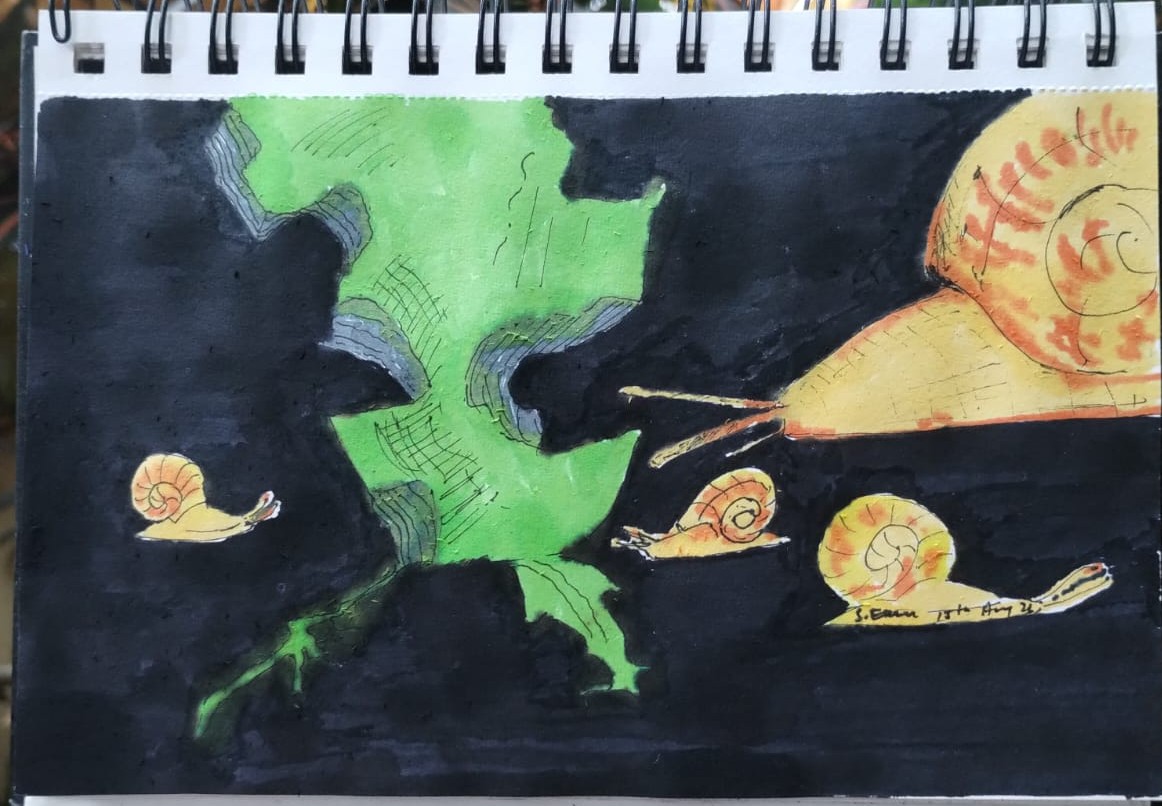
Blood, sweat, and tears do not go to waste, so the land rewards the farmer with enormous lettuces that outgrow his house and become a beacon to snails.
Large lettuces lead to larger snails, and larger snails lead to bigger problems. Not only do they eat his labor, but they also lay waste to the city, causing accidents, abducting girls and women, killing people, and their presence triggers the replacement of the city’s original buildings with skyscrapers.
In the current context, I couldn’t help but think of the giant snails as data center owners and other overlords of capitalism because they are still the same predatory class that keeps taking, stays hungry, and never rests.
There’s no pesticide yet potent enough to stop them.
René Laloux took his time to draw a semi-nude woman
I always pay attention to the way animators draw women, the depths they are willing to dig in their characters, and how they clothe them. I draw conclusions about what a person thinks of women from how they portray them.
While gigantic snails are busy attacking the city, the film pauses to depict a woman undressing. The mood of the film shifts briefly till she is taken by one of the snails.
I wonder what else could have briefly shifted the mood of the film? A woman drinking coffee, or reading a book, or just sleeping, fully clothed.
Needless to say, the woman also fits the beauty standards.
Also read: Evolution of beauty standards in global animation and characters that don’t fit
The never-ending predatory cycle
The full film is not captured in The Pot video, and discovering the film’s end reinforces the idea that no matter how hard someone works and tries to grow something good, the current world under capitalism will create analogous entities to eat it.
René Laloux’s left-leaning ideology is not latent in his productions. Fantastic Planet’s surrealism and political critique extend beyond the main film, merging with shorter productions like Les Escargots without losing its potency.
Conflict with masters or “higher-ups” is present in both works – Fantastic Planet and The Snails, and so is the desire to break free.
Final Thoughts
Kangaroo is guilty as the government. And in the case of Les Escargots, the snails are predators and the government.
Les Escargots won multiple awards, including the Grand Prix at the Mamaïa Festival (Romania) and the Special Jury Prize at the Cracow Festival, and its adaptation into a fan video for a band, nearly 30 years after its original release, is a testament to its timelessness and its accurate commentary on modern life.
AD